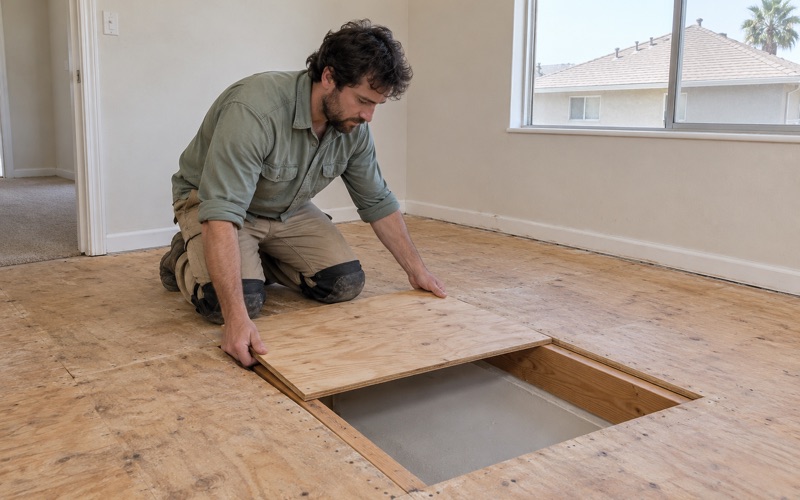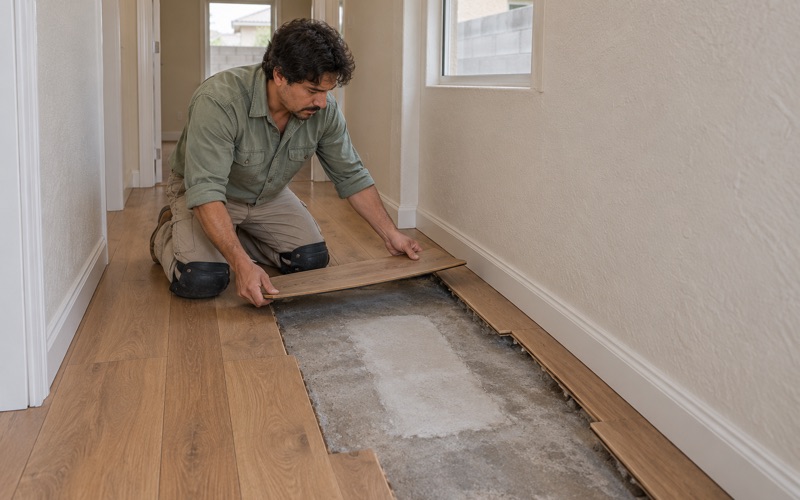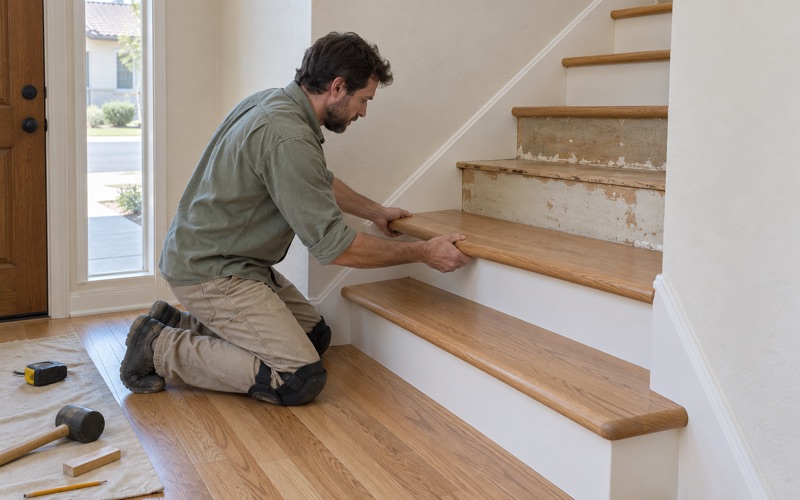
Westminster Wood Flooring brings more than 20 years of experience to wood flooring in Lomita, and the habits are the same on every house: measure first, price second, sand last. Before any material is ordered we take moisture readings in the boards and the subfloor and write them down. The subfloor itself gets walked and probed, so a soft spot or water-swollen sheathing turns up in the estimate rather than in a callback.
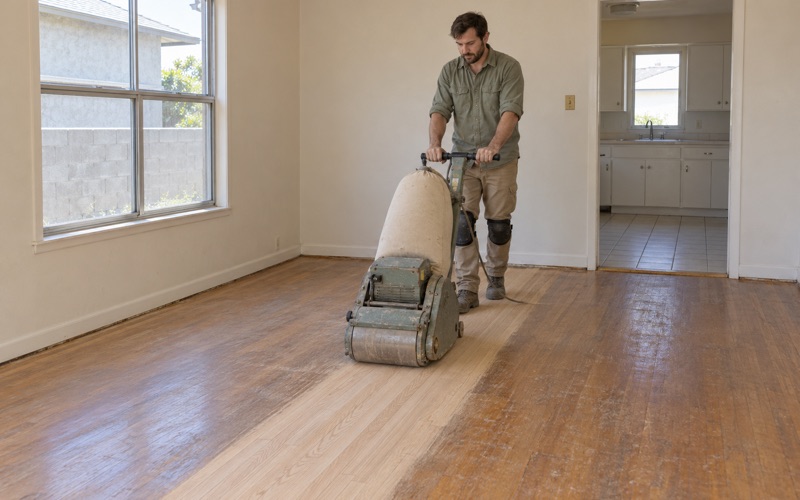
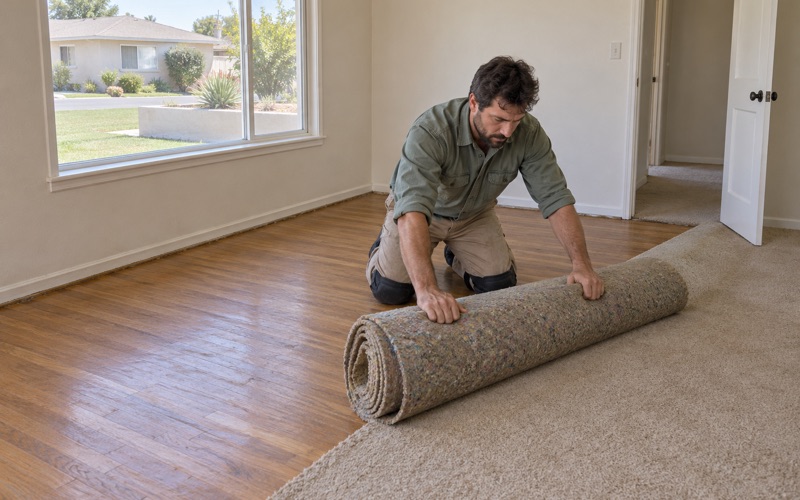
The work ranges from refinishing boards that have spent years under carpet to replacing tired flooring with new hardwood or engineered plank. When carpet comes up, we pull the pad, staples and tack strip and fill every hole before the drum sander touches the floor. Stairs are priced by the tread and riser, not buried in a square-foot figure.
Homeowners near an airfield often ask one more thing: what will a new floor do about the planes? The honest answer takes a few sections, because hard floors, rugs and underlayment each change sound in a house differently, and none of them changes what happens overhead.
Floors Next Door to Zamperini Field
From Lomita Flight Strip to Torrance’s Airport
The airfield on Lomita’s western edge began as a wartime project. The United States Army Air Forces completed it on March 31, 1943, and it was known as the Lomita Flight Strip, an emergency landing field for military aircraft on training flights. Today it is Torrance Municipal Airport, also called Zamperini Field.
The name is not the only link to the city. Lomita originally covered about seven square miles, and the territory it lost over the years included Lomita Fields, the ground the airport now occupies.
It is a busy field. In 2016 the airport logged 119,034 aircraft operations, an average of 325 a day, and 99 percent of them were general aviation. For households nearby, the sound of small aircraft is a regular part of the day.
What That Means for a Flooring Job
An airport next door does not change how wood is installed, but it does change what people ask for. We hear requests for the quietest possible floor, and we would rather explain what a floor can do than sell an upgrade on a promise. Sound from overhead reaches a room mainly through the roof, walls and windows, and the floor is the one surface facing away from it.
We also hear the reverse worry, that trading carpet for hardwood will make the planes louder. Carpet does little against sound coming through a roof or window, so removing it rarely changes how loud a passing aircraft seems. What changes is the echo of everything happening in the room itself, which the section on rugs and underlayment covers.
That does not make flooring irrelevant to comfort. What a floor controls is the sound made inside the house, which is the part of the noise a homeowner actually gets to choose.
Looking for wood-flooring closer to Commerce? See Wood-Flooring Services in Commerce.
What Torrance’s Noise Rules Cover
The City of Torrance runs a noise abatement program for the airport, and its guide, revised February 20, 2024, states that aircraft noise is monitored 24 hours a day, seven days a week. The monitor map in that guide places one monitor right beside the City of Lomita label, east of the airfield. The guide also describes the airport as surrounded by noise-sensitive residential area.
Limits on Aircraft, by Time of Day
The limits are written for aircraft, not houses. From 7:00 a.m. to 10:00 p.m. on weekdays, and 8:00 a.m. to 10:00 p.m. on weekends and holidays, the guide sets 82 dB(A) as the maximum sound level and 88 dB(A) as the SENEL limit. Overnight the limits drop to 76 dB(A) maximum and 82 dB(A) SENEL, and touch-and-go and stop-and-go operations are prohibited at all times.
Those numbers describe what a single aircraft is allowed to produce as it passes a monitor. They are not a measure of the sound level inside anyone’s living room, and they say nothing about how loud it should be inside a Lomita house.
What the Program Does Not Offer
Nothing we have read from the airport or the city offers Lomita homeowners help with insulating a house against aircraft sound. The rules govern how pilots fly and what the monitors record; what happens inside your walls is left to you. That is why we treat quiet as a flooring decision a household makes, not a benefit that arrives with the airport.
We say this plainly because a new floor sold as a fix for aircraft noise would be a promise no floor can keep. A good floor can still make a house calmer, and the next section explains where that calm comes from.
Hard Floors, Rugs and Sound Inside the House
Swapping carpet for hardwood changes a room’s sound in ways people notice within a week. Carpet and pad soak up footsteps, voices and the television, while bare wood reflects them, so the same room sounds livelier and footfall carries further. None of that is a defect, but it is worth knowing before the carpet goes out to the curb.
Impact Sound Versus Airborne Sound
Footsteps, dropped keys and chair legs create impact sound that travels into the structure, while voices, music and passing aircraft are airborne sound. A floor’s build-up mostly affects impact sound, and that matters most when someone lives below, as in an upstairs unit or a condo. In a single-story house, underlayment is more about how the floor feels and sounds to the people walking on it.
Walls, doors and windows are where airborne sound gets in and out, and those are jobs for other trades. We stay inside our lane: the floor, what sits under it and how it is fastened.
Choosing Underlayment and Installation Method
On upstairs and condo installs we choose acoustic underlayment with the neighbor below in mind, and we read the association’s rules before any floor comes up. Associations often set their own underlayment requirements and work-hour limits, and Civil Code 4760 governs condominium alterations, so the paperwork comes first. A floating installation over a suitable pad behaves differently underfoot than a glue-down or nail-down floor, and we walk through those differences before you choose.
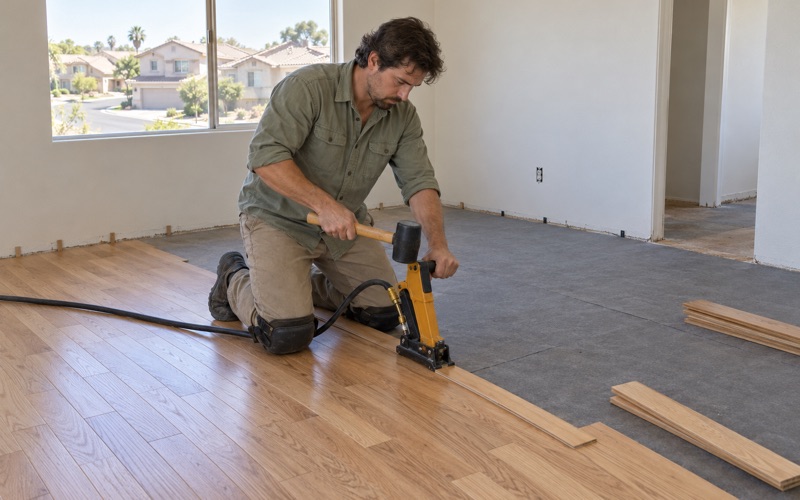
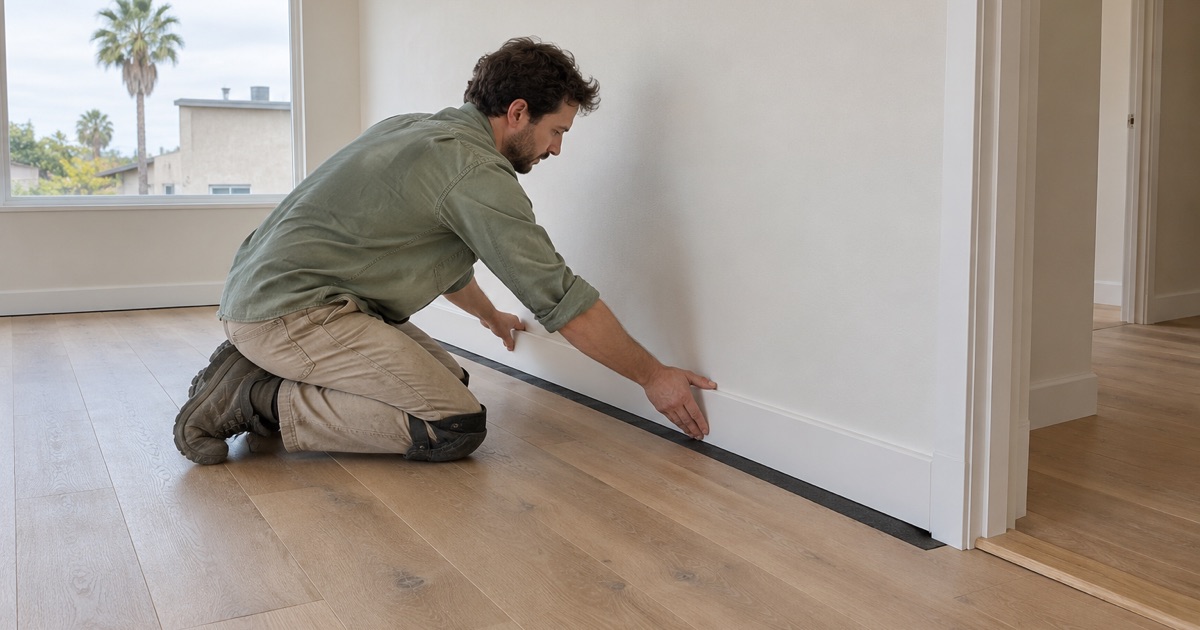
Nail-down solid hardwood over a plywood subfloor has a firm, solid feel, while a floating engineered floor can sound hollow if the pad and subfloor are wrong. That hollow sound is usually a flatness or underlayment problem, and it is far easier to fix before installation than after. We check flatness along with moisture readings, and we let boards acclimate before they go down.
Rugs, Felt Pads and Finish
Area rugs do much of the work carpet used to do, and a rug on a pad in a living room or bedroom quiets a hard floor more than most people expect. Felt pads on chair and table legs cut the scrape that bare wood amplifies. Sheen is a separate choice: a satin or matte finish hides daily wear better than gloss, though it does nothing for sound.
For bedrooms on the airport side, one approach we often suggest is a wood floor with a large rug and heavier curtains rather than wall-to-wall carpet. That keeps the easy cleaning and look of wood while softening the room, and it leaves the choice open to change later.
Species matters less for sound than for wear. A harder species on the Janka hardness scale, such as hickory or white oak, resists dents from dropped objects better than a softer one. That makes it a sensible choice for kitchens, hallways and the rooms a family uses most.
Planning Floor Work in a Lomita House
Lomita’s housing skews older. Of 7,904 housing units in the city, 78.9 percent were built before 1980, and the 1970s were the busiest single decade, with 22.3 percent of the stock. Older houses can hide earlier flooring layers, patched subfloors and adhesives that deserve a careful look before anything is sanded.
Lomita’s building and safety services are provided by Los Angeles County Public Works under contract, from the Lomita-Lennox office on Narbonne Avenue. If flooring is one piece of a larger remodel, that office handles plan check, permits and inspection for the project.
Older Houses, Lead and Old Tile
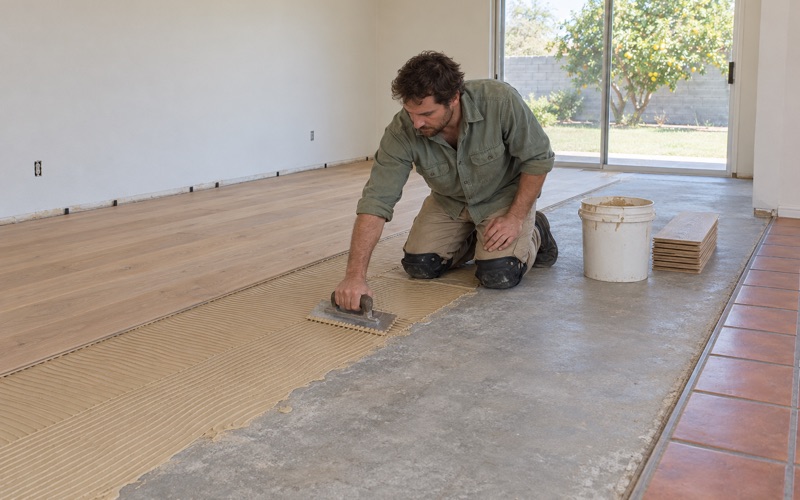
On houses built before 1978 we follow lead-safe work practices under the EPA Renovation, Repair and Painting rule. Old floor tile, including the 9x9 size, and black mastic are treated as a possible asbestos question before anything is scraped or sanded, and we will recommend an asbestos survey when one is warranted. Where old glued-down flooring comes off concrete, we remove the adhesive and test the concrete for moisture before new material goes down.
Squeaks, board gaps and cupping are common complaints in older floors, and each has a different cause. Squeaks usually trace to loose fasteners or movement between boards and joists, gaps often follow seasonal swings in moisture content, and cupping points to moisture under the boards. We find the cause with a wood moisture meter and a look at the subfloor before recommending a sanding, a repair or a replacement.
Finishes, Dust and Cure Time
Every finish we apply comes from products legal to use in the South Coast air basin, where SCAQMD Rule 1113 limits wood coatings to 275 g/L. Sanding runs with dust containment, and you get a written cure schedule showing when each room can be walked on and when furniture can go back. For a household living at home during the job, that schedule matters as much as the stain color.
The usual choice is between a waterborne polyurethane, which dries clear and holds its color, and an oil-modified polyurethane, which ambers over time and pushes red oak toward orange. We show both on a sample board before the whole floor is coated.
Estimates, Repairs and Scheduling
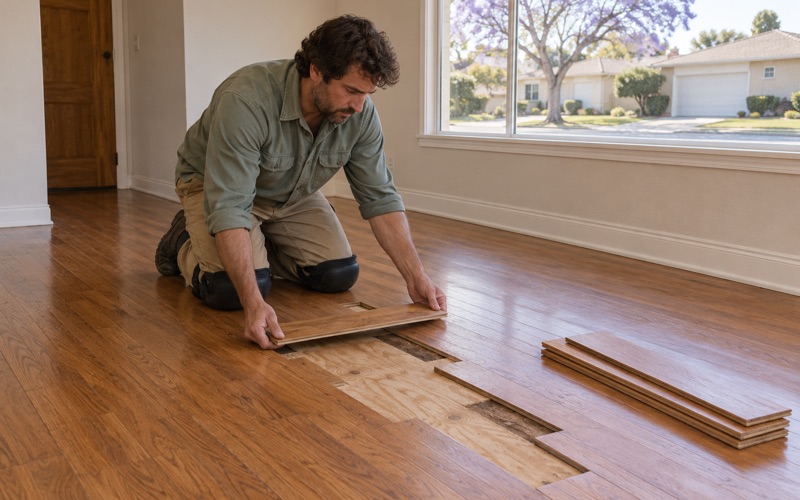
Estimates come in writing and itemized, so a seller, landlord or insurance adjuster can use them. When a floor needs repair rather than replacement, we match discontinued boards by species, width and finish so the patch does not read as a patch. Water-damaged floors are traced back to the source and documented with photos and readings before any boards are replaced.
Tell us which rooms sit on the side of the house nearest the airport and how you use them. We will plan the floor, the underlayment and the rugs around the quiet you actually want, and we will be straight about the part no floor can reach.
- 20+ Years of Floor Work
- Written, Itemized Estimates
- Moisture Readings Recorded