Westminster Wood Flooring has handled wood-flooring in Garden Grove for more than 20 years, refinishing, repairing and installing floors in houses where the owners live and plan to stay. Much of that work sits beside other repairs on the same house, and in Garden Grove one of those repairs can come with a city grant attached. This page is about planning the two together.
Before we price anything, we check what is underneath. Soft spots in the subfloor and sheathing swollen by an old leak get found at the estimate rather than halfway through the job, and moisture is read in the wood and in any concrete the floor sits over, with the numbers written down. The estimate you get is itemized line by line, so it can sit next to a plumber’s quote, a painter’s quote or a grant application without anyone guessing what the floor portion costs.
We also keep the household in mind. Dust is contained, and each room gets a written cure schedule telling you when it can take socks, then shoes, then furniture.
Garden Grove’s Home Repair Grant and What It Names
How the Program Works
The City of Garden Grove runs a Home Repair Program for owner-occupied houses inside city limits. Grants go up to $5,000 for minor improvements, and the homeowner puts in at least $500 of their own money. If the repairs cost more than $5,000, the owner pays the difference. Eligibility is income-based: the 2025 low-income limit, effective July 1, 2025, was $135,350 for a household of four.
Funding is not first-come, first-served. The city awards it to 20 eligible applicants per round, selected through a blind raffle. The 2025 rounds ran June 2 through June 16 and December 1 through December 15. Round dates change, so check the current schedule with the city’s Neighborhood Improvement staff rather than relying on an old flyer, or on us. Roof work is not part of this program; the city points homeowners seeking roof work to a separate Re-Roof Loan Program.
The Repairs the Flyer Names
The city’s 2025 flyer lists exterior painting, plumbing, electrical, windows, HVAC, pest control and handicap accessibility as eligible repairs. City news from May 29, 2025 adds repairs that address building or safety code violations. Floors are not named in either list, and the flyer closes its list with “etc.,” so we do not tell anyone the grant will or will not pay for floor work. That answer belongs to the program staff.
Why We Plan Beside It, Not Inside It
What we can do is make the floor work fit around whatever the grant funds. With a raffle, a household may not know which repairs are going ahead until selection, and a floor job should not stall waiting on that. We keep our estimate separate and itemized, so the floor can be scheduled before, after or alongside the grant-funded work without tangling the paperwork. It also means a household that is not drawn in the raffle can still move ahead with the floor on its own timeline. If a grant-funded plumber or electrician needs to open a floor, we would rather see the plan first than find a fresh hole in the boards later.
Looking for wood-flooring closer to Stanton? See Stanton Wood-Flooring.
Floors in Garden Grove’s 1950s and 1960s Houses
Garden Grove incorporated on June 18, 1956, in the middle of its post-war growth, and the housing stock still shows it. Of 50,960 housing units, 18,283 were built in the 1950s, which is 35.9 percent of the city, and 57.5 percent went up between 1950 and 1969. Owners here mostly live in detached houses: 79.1 percent of owner households do.
Pre-1980 construction accounts for 77.4 percent of the city’s units, and only 1.2 percent predates 1940, so the typical floor job in Garden Grove is in a post-war house rather than a prewar one or a recent build.
What We Look For First
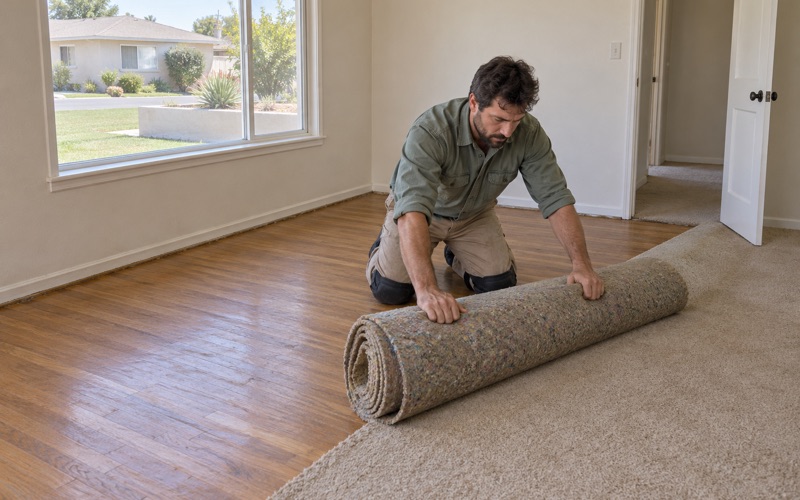
A house of that age has usually had several rounds of flooring laid over whatever came first. We don’t assume what is under the carpet or the vinyl until we have lifted a corner and looked. When wood turns up, we pull the pad, staples and carpet tack strip and fill the holes before sanding, so the boards refinish clean instead of showing a grid of pinholes. Where old 9x9 tile or black mastic appears, we treat it as a possible asbestos question and stop for an asbestos survey before anything is sanded or scraped.
Lead and Older Paint
Every house built in those two decades predates 1978, which brings the EPA Renovation, Repair and Painting rule into floor work that disturbs painted baseboards, trim or shoe molding. We use lead-safe work practices on pre-1978 houses: containment, careful trim removal and cleanup that does not carry dust into the rest of the home. That matters most when a family is living in the house during the job.
Refinish, Repair or Replace
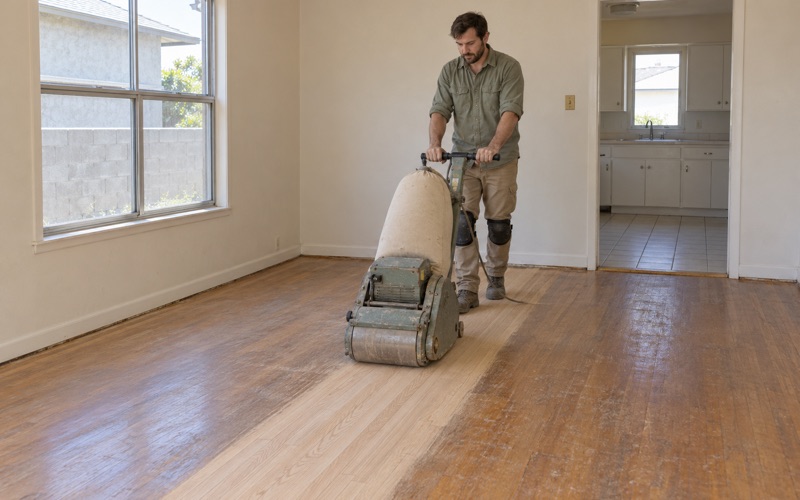
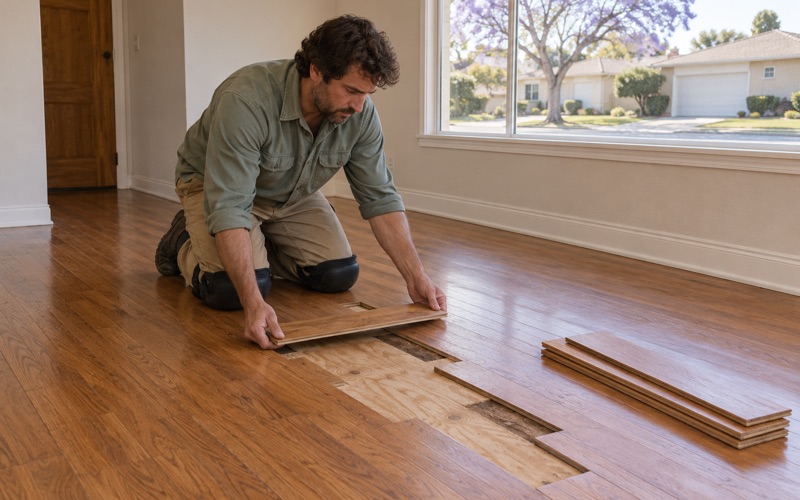
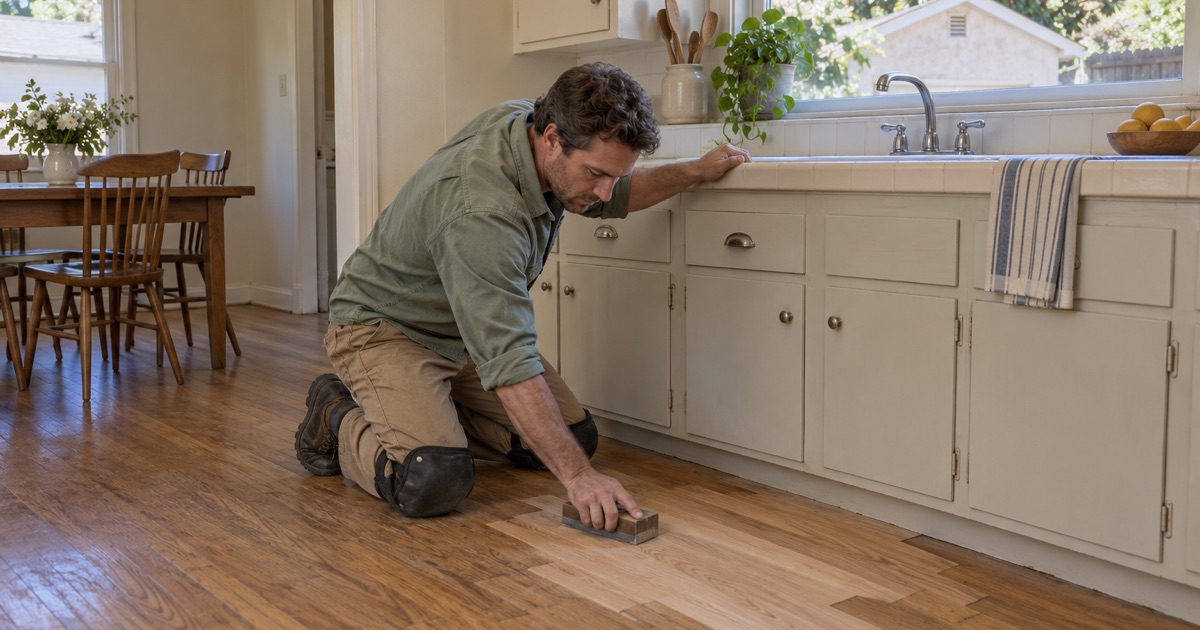
Many owners here start with a refinish question. A drum sander, edger and a proper grit sequence can take a worn floor back to bare wood when enough material remains, while a screen and recoat can freshen a finish that is dull but intact. Where boards are cupped, stained by pet urine or damaged by an old leak, a weave-in repair with boards matched by species, width and finish keeps the patch from reading as a patch. Every finish we apply is chosen from products legal in the South Coast air basin under SCAQMD Rule 1113 and its 275 g/L wood-coating limit; within that, the choice between waterborne polyurethane, oil-modified polyurethane or a hardwax oil comes down to sheen level, color and how the room is used.
Pairing a Plumbing or Pest Repair With Floor Work
Two of the repairs the grant names, plumbing and pest control, are the ones most likely to reach the floor. Planning the floor job alongside them saves cutting and patching the same room twice.
Plumbing Under the Floor
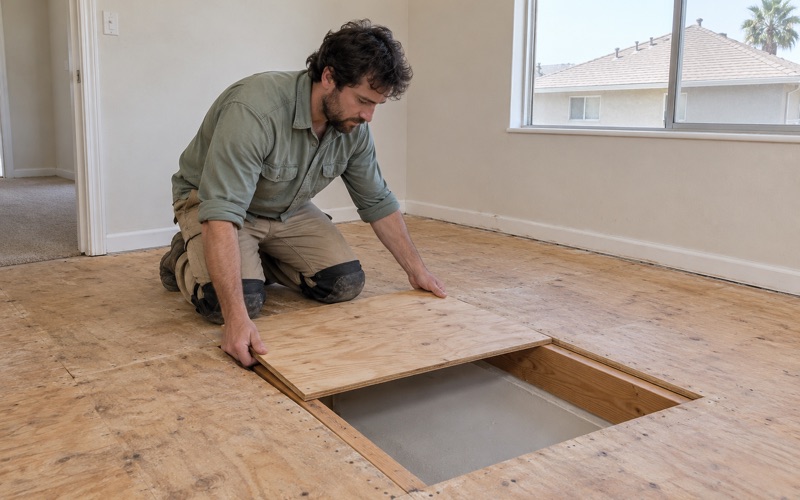
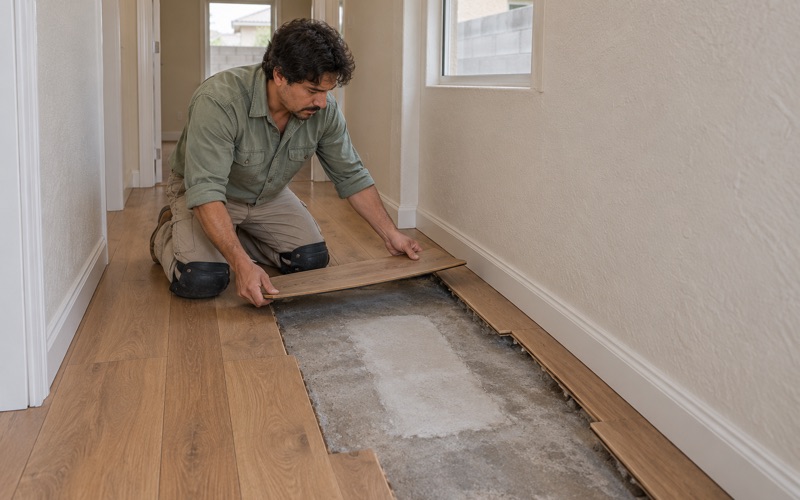
A slab leak or a repipe often means someone has to open the floor to reach the line. Where wood is involved, we plan the plumber’s access hole before any boards are cut, so the opening follows board edges and the boards can go back. After the repair, we dry the area, check moisture content with a wood moisture meter and test any exposed concrete before patching the boards in. If the leak already damaged the floor, we trace the water to its source and document it with photos and readings an insurance adjuster can use.
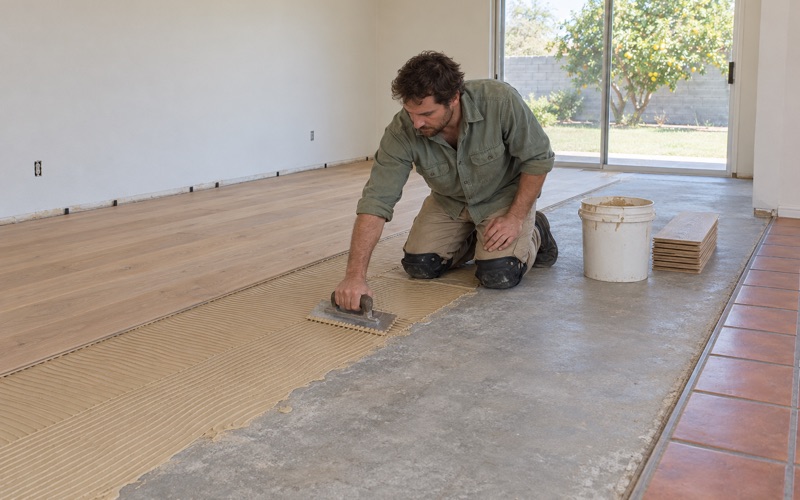
Glued-down or engineered flooring over concrete is harder to lift and relay, and we say so in the estimate. Sometimes the cleaner answer is to remove a full run of boards to a doorway or reducer strip and lay matched boards back, rather than patch a square in the middle of a room. If the original product is discontinued, we match it by species, width and finish before cutting anything.
Termites and the Floor
Drywood termites and their frass sometimes turn up in floorboards, trim or subfloor when a pest treatment is being planned. If pest control is on the list, it helps to have the floor looked at before or right after treatment. We check the subfloor for soft or damaged areas, replace affected boards and match them to the ones that stay. The treatment itself is the pest company’s work; the floor repair is ours.
Accessibility and Electrical Work
Handicap accessibility work, another named repair, often reaches the threshold. A ramp or a widened doorway may call for a lower reducer strip or a flush transition where wood meets tile, and we can set the floor height so the change works for a walker or wheelchair. Electrical work that adds a floor outlet or reroutes a line under the floor is another place to agree on the cut before boards come up.
Sequencing the Jobs
The usual order is simple: fix the cause, dry and verify, repair the floor, and apply finish last. Painting and HVAC work are worth scheduling around a refinish too, since fresh finish needs its cure time without drywall dust or a crew walking through. Our cure schedule is written, so the painter and the household both know which rooms are off limits and for how long.
Planning Floor Work in Garden Grove
Moisture Before Material
Before we order new flooring, we take readings. Wood gets a moisture meter reading and time to acclimate; concrete gets an ASTM F2170 in-situ relative humidity test or a calcium chloride test, depending on the job. Garden Grove sits in the National Weather Service’s Orange County Inland forecast zone, but we don’t let a zone name tell us what a floor is doing. The readings do, and we write them down. Where old glued-down flooring comes up, the adhesive is removed and the concrete tested before anything new goes down, whether the new floor is glue-down, floating or nail-down over a plywood subfloor.
Choosing a Floor for a Mid-Century House
Species choice is mostly about wear and look. White oak and red oak are the usual starting points; hickory and maple rank harder on the Janka hardness rating, and walnut is softer and darker. For engineered flooring, wear layer thickness decides how many future sandings the floor can take. New products should be CARB Phase 2 compliant and meet TSCA Title VI formaldehyde limits.
In a house with a family at home, dust containment and a dustless sanding system matter as much as species. Upstairs rooms and condo units call for acoustic underlayment chosen with the neighbor below in mind, and we read the association’s rules before work starts. Squeaks in a mid-century floor often trace to loose boards or subfloor fasteners, and we fix those before a new finish goes on rather than sealing the noise in.
Stairs, Transitions and Estimates
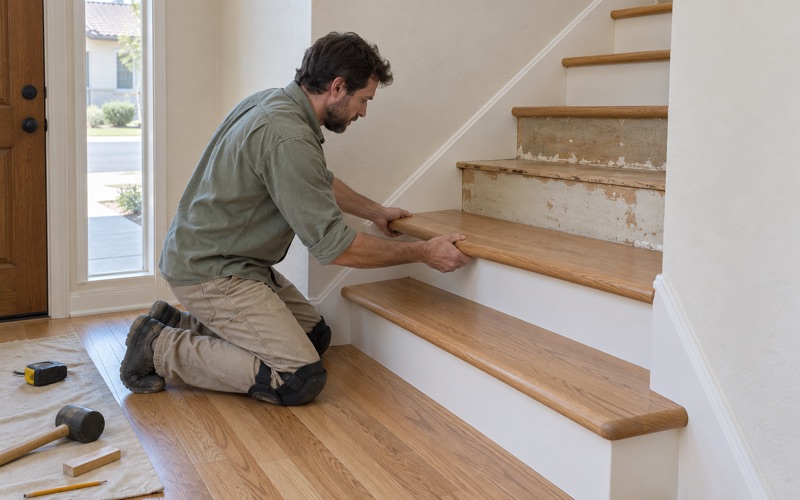
Stairs are priced per tread and riser, not folded into a square-foot number, and stair nosing, reducer strips, T-molding and shoe molding appear as their own lines. The result is a written, itemized estimate you can set beside a grant award letter, a plumber’s bid or a seller’s disclosure and understand at a glance. If you are waiting on a raffle result, we can hold the estimate as written and schedule the floor once you know which repairs the city is funding.
- 20+ Years of Floor Work
- Written, Itemized Estimates
- Moisture Readings Recorded