Westminster Wood Flooring handles wood-flooring in El Segundo with more than 20 years in the trade behind us, and every job here starts with the house in front of us. We refinish, repair and install wood floors, and we price nothing until we have walked the rooms, checked the subfloor and taken moisture readings. Those readings are written down, so you can see exactly what we saw.
Most of the homes we are called to in this city were built decades ago, and many have been through several owners, tenants and remodels since. That history shows up in the floor as sanded-thin boards, patched sections, old carpet staples and finishes layered on older ones. We read all of it before we recommend anything, because a plan built on assumptions tends to become a callback.
Below, we lay out what the city’s own records say about the ground under El Segundo, what its housing stock looks like, and how we assess and schedule floor work here. It is written for owners, landlords and tenants alike, because each of them brings us different questions.
Floor Work in a Town Built Over an Oil Field
El Segundo takes its name from oil. Standard Oil bought 840 acres here in 1911, and the city is named for being the company’s second West Coast refinery; it incorporated on January 18, 1917. Many homeowners know that history, and some ask us whether it matters for a new floor.
What the City’s Own Planning Documents Say
The clearest statement we have found is in the city’s May 2020 notice for the Pacific Coast Commons project on Pacific Coast Highway. It reads: “Although the El Segundo Oil Field underlies the City, production has declined since 1967 and only five wells continue to produce oil resources.” The same notice, citing the state’s well finder, found no oil wells or extraction activity on that project site itself.
The city’s 2021 Housing Element study adds a longer view, recording that over 14 million barrels of oil and condensate were produced locally between 1935 and 1992, and that production has steadily declined since 1967. The two documents do not describe the field’s extent in the same words, and we do not try to settle that question for anyone. Read together, they describe a field long past its peak, with a handful of wells still producing as of 2020.
The 2020 notice also recorded other conditions worth knowing about. It found potential for collapsible or unsuitable soils at the Pacific Coast Highway project site, which is not within a state liquefaction or landslide zone, and it noted that the State identifies the coastal portion of the city as tsunami hazard areas. It also placed the entire city outside very high fire hazard severity zones.
Why We Assess the House, Not the Field
None of that tells us anything about a particular living room. We have no well inventory for residential blocks, and we will not guess at what lies under any street or lot. What we can measure is the floor itself: the moisture content of the boards, the condition of the subfloor, how flat the surface is and how the finish is holding up.
That is where our recommendations come from. If a floor is cupping, gapping or squeaking, we look for a cause we can see and measure, such as a plumbing leak, trapped moisture or loose fasteners, and we show you the readings. A floor problem gets a floor answer, backed by numbers you can keep.
Looking for wood-flooring closer to Sierra Madre? See Wood-Flooring Services in Sierra Madre.
From Oil Production to Built-Out Neighborhoods
The oil era and the housing boom overlapped here. Census figures for the city’s 7,889 housing units show that 73.4 percent were built before 1980, and the three decades from 1940 through 1969 alone account for 54.1 percent. The busiest single decade was the 1960s, which accounts for 1,691 of them.
The same 2021 study notes that all areas of the city are essentially built out, so future development would be infill or replacement of existing uses. In practice, most floors we see sit in houses and apartments that have stood for decades.
What Mid-Century Construction Means for a Floor
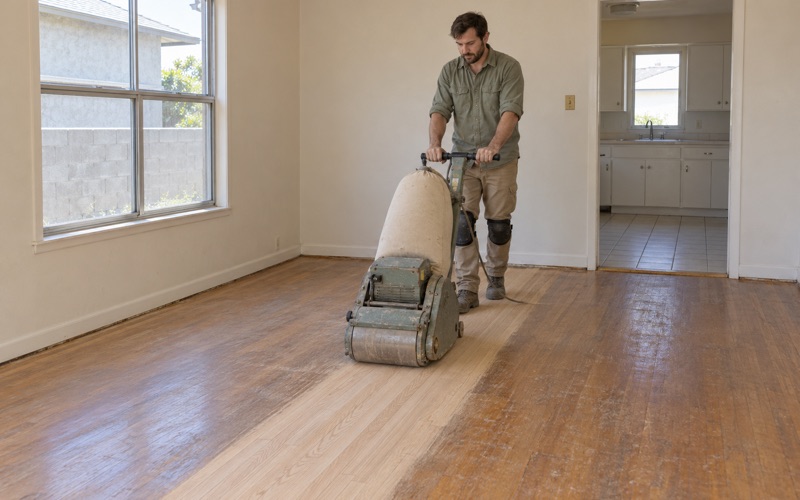
A house from the 1940s, 1950s or 1960s has often been refinished, recovered or partly replaced more than once. We check how much wear layer is left before we promise a full sand, because a floor that has been sanded several times may only take a screen and recoat. We also look for patched areas where boards of a different width or species were woven in during an earlier repair.
Age also raises two safety questions we treat seriously. Homes built before 1978 get lead-safe work practices under the EPA Renovation, Repair and Painting rule, and any old floor tile or black mastic we uncover is handled as a possible asbestos question before anything is sanded or scraped. A layer of 9x9 tile under carpet or vinyl is exactly the kind of find we stop and plan around rather than grind through.
Renters, Landlords and Owners
Renters occupy 57.5 percent of El Segundo’s occupied housing units, and about a third of renter households live in buildings of five to nine units. For owners of rental units, that often means turnover work: refinishing between tenants, board replacement after a move-out, and repairs that need to wrap up before the next lease starts.
For landlords, we write itemized estimates that separate normal wear and tear from damage, which helps when a security deposit question comes up under Civil Code 1950.5. On upstairs units, we choose underlayment with the neighbor below in mind and read the association’s rules and alteration paperwork before any floor comes up.
Owner households lean the other way: 70.0 percent of the city’s 3,162 owner-occupied units are detached single-family houses. For those owners, a floor project tends to be a long-term decision, so we talk through how many more sandings a floor can take and when the next refinish is likely to be due.
Assessing an Older El Segundo Floor
Every assessment we do here follows the same order, and it is recorded as we go. We measure, we inspect, and only then do we price. The written record lets you compare our recommendation with anyone else’s on the same terms.
Moisture Readings Come First
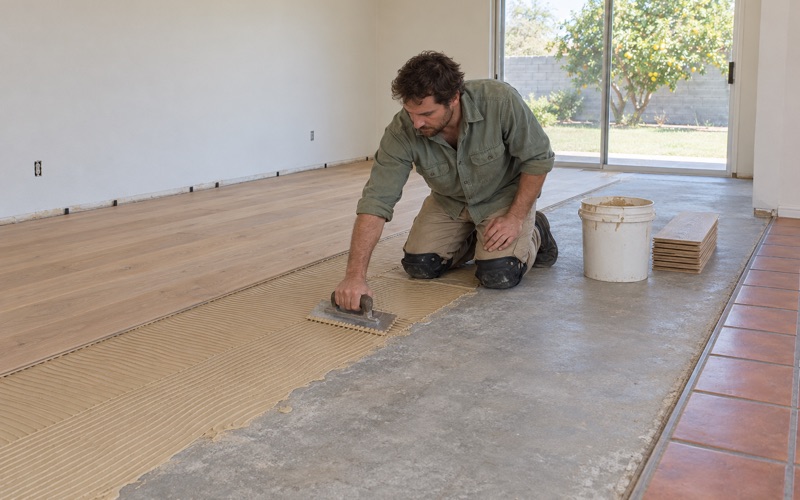
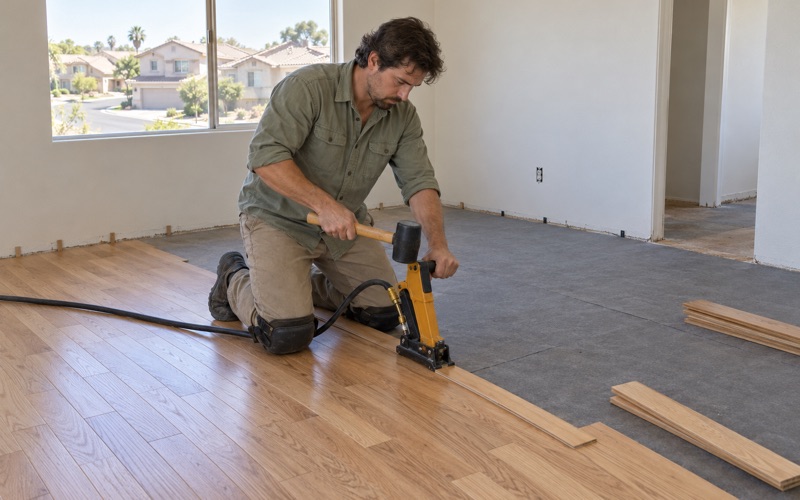
We take readings with a wood moisture meter in the existing boards and in new material before it goes down, and we let new flooring acclimate until its moisture content falls where the NWFA installation guidelines call for. Where a room has concrete under it, we test that concrete with an ASTM F2170 in-situ relative humidity test or a calcium chloride test before choosing a glue-down or floating installation. El Segundo falls in the National Weather Service forecast zone named Los Angeles County Beaches, and we check that zone’s forecast when we time acclimation and finish coats.
Subfloor and Surface
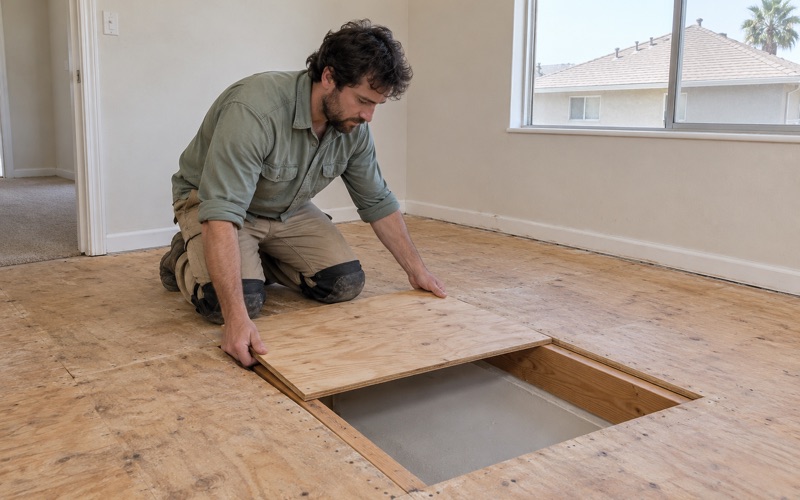
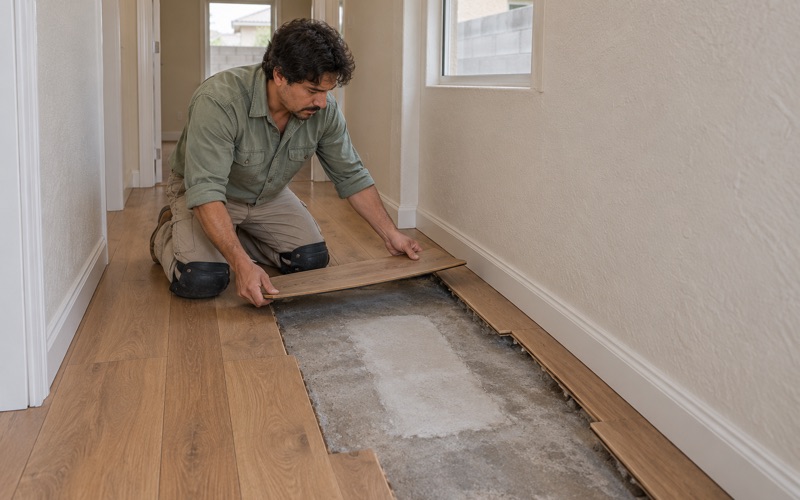
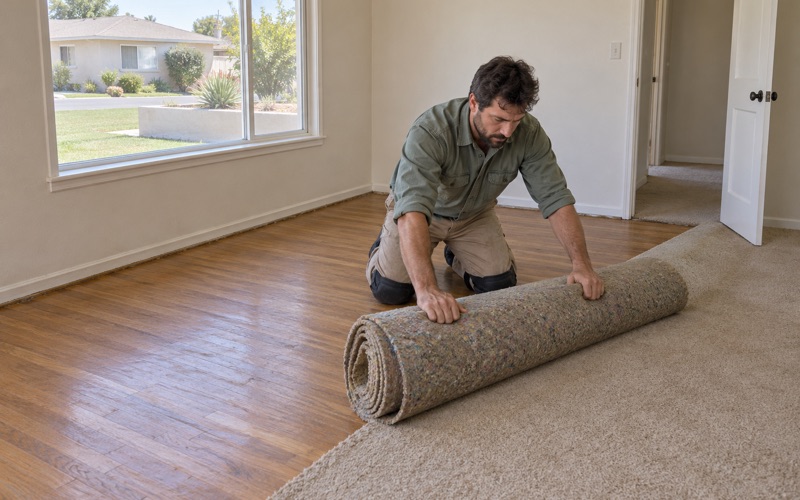
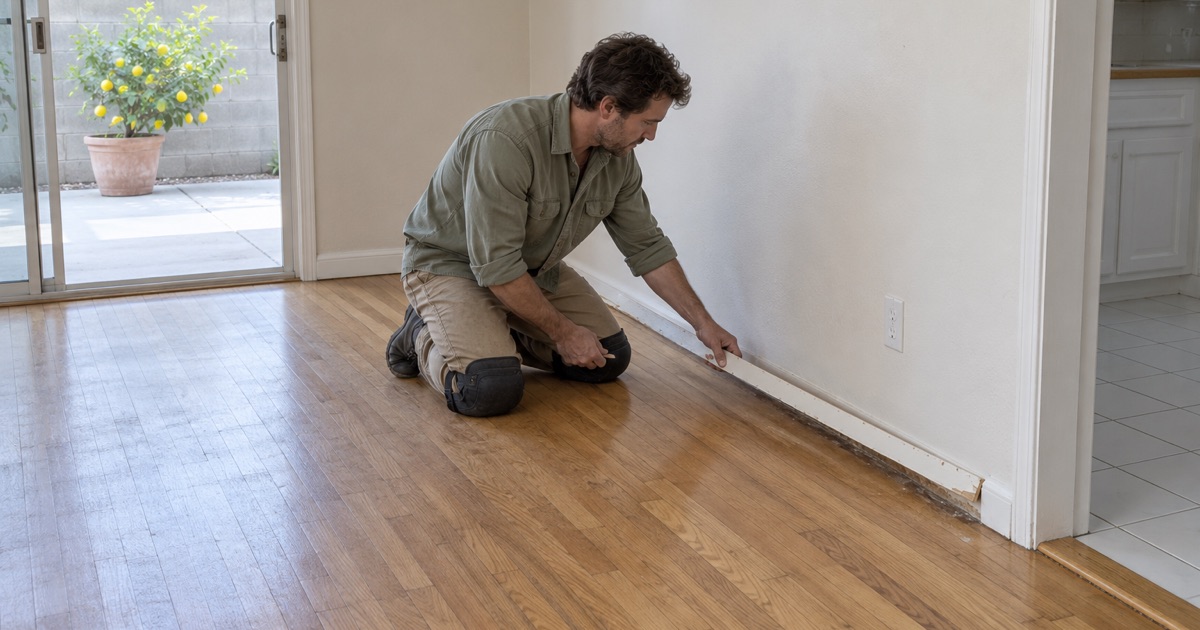
Before a finish floor is priced, we check the subfloor for soft spots, water-swollen sheathing and the loose fasteners that cause squeaks. Old carpet pad, staples and tack strip come up, and the holes are filled before sanding so the refinished surface looks clean. If we find cupping, crowning or buckling, we trace it to its source first, because sanding a floor that is still wet only moves the problem.
When Water Is the Cause
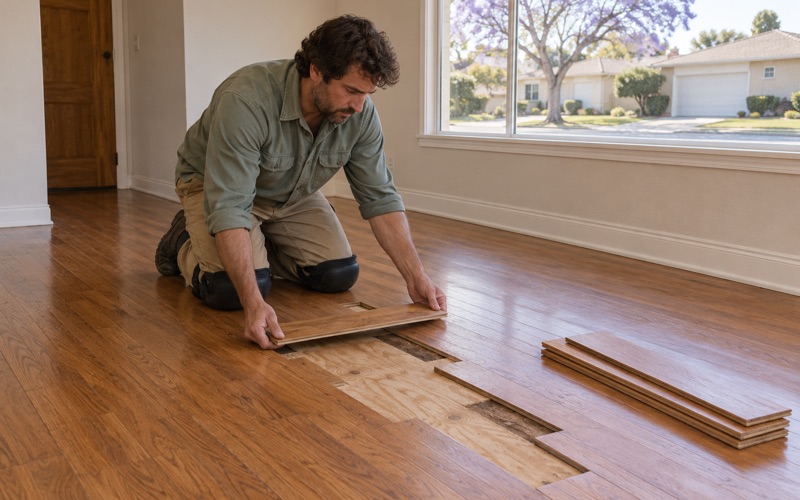
If a slab leak, repipe or appliance failure has soaked a floor, we open the affected area, dry it and document the damage with photos and moisture readings an insurance adjuster can use. When a plumber needs access, we plan that opening together before any boards are cut. Discontinued boards are matched by species, width and finish, so the finished repair does not read as a patch.
Not every damaged board is a water problem. Drywood termite activity, often announced by small piles of frass near baseboards, can hollow boards from the inside, and we point it out so you can have it treated before we replace anything. Pet urine stains are another common cause, and deep ones usually mean board replacement rather than sanding.
Planning Floor Work in El Segundo
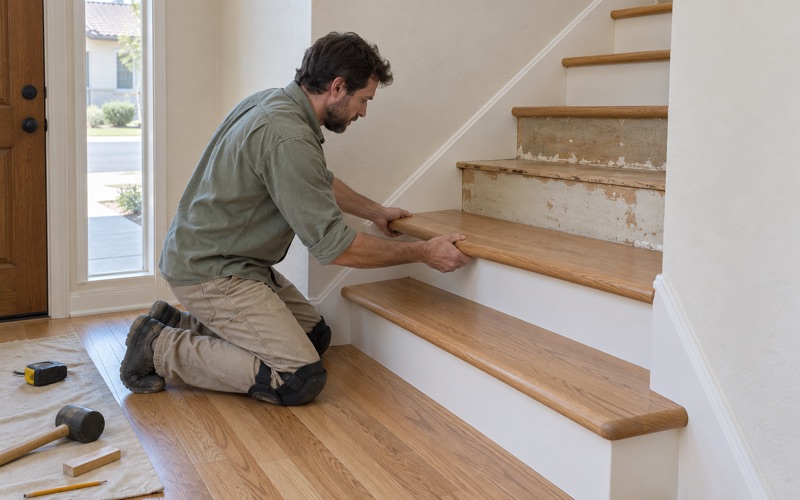
Once the assessment is done, you get a written, itemized estimate. Stairs are priced per tread and riser rather than folded into a square-foot number, and transitions such as reducer strips, T-molding and shoe molding are listed separately so nothing surprises you on the final invoice.
Choosing Wood for the Way You Live
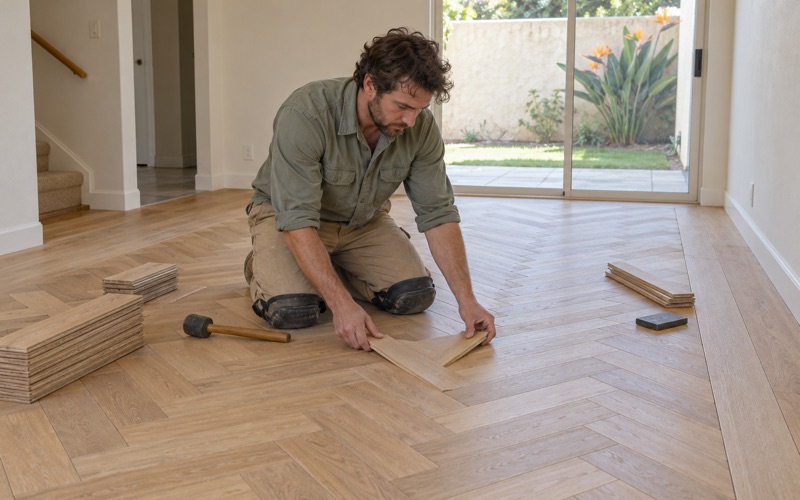
Species and construction come down to how a room is used. We compare options by Janka hardness rating, so a family with dogs can see why hickory or white oak holds up better than a softer choice, and we explain wear layer thickness on engineered boards before you pick one. A thicker wear layer leaves room for future sanding, which matters in a house you plan to keep.
Any engineered or composite product we install should carry labeling for the CARB Phase 2 and TSCA Title VI formaldehyde limits, and we check for it before ordering. We keep that label with the order, alongside the moisture readings taken for the room it is going into.
Finishes That Meet Local Air Rules
El Segundo sits within the South Coast air basin, where wood coatings are held to a VOC limit of 275 grams per liter under SCAQMD Rule 1113. We choose only finishes legal to apply here, including waterborne polyurethane, oil-modified polyurethane and hardwax oil, and we settle sheen level and color with you before the first coat. Red oak can turn orange under some finishes, so we sample on your actual floor rather than on a showroom board.
Living Through the Job
Many households stay home while we work, so we set up dust containment and run a dustless sanding system on the drum sander, edger and orbital sander. You receive a written cure schedule showing when each room can take foot traffic and when furniture can go back. We also sequence the job so floors come after painting, plumbing and cabinet work, which keeps finished boards from being scuffed or soaked by another trade.
If you own or manage a home in El Segundo and a floor is worn, damaged or simply ready for a change, we start with a visit and a set of written readings. From there, you will know what the floor needs and what the work will cost before anything begins.
- 20+ Years of Floor Work
- Written, Itemized Estimates
- Moisture Readings Recorded