Westminster Wood Flooring has done wood flooring in Cerritos and across the region for more than 20 years, and much of what we are asked here comes down to one decision. An owner who has lived in the same house for decades wants to know whether the floors should be refinished, repaired, replaced, or made simpler to look after. We answer that with a walk-through, measurements and a written, itemized estimate rather than a sales pitch.
That decision looks different when you plan to stay. A floor bought for resale is judged on how it photographs; a floor you will live on for years is judged on how it wears, how it cleans and how much of the house has to be emptied to work on it. We price both routes when an owner asks, so the choice is made on numbers.
Every job starts with the condition of what is already there, because a floor that fails early is the most expensive choice of all. We look before we quote, and what we find goes into the estimate in writing.
Cerritos Owners Who Stayed On
Cerritos is a city of long-time owners. The 2024 American Community Survey counts 5,809 of the city’s 12,193 owner householders at 65 or older, or 47.6 percent. Only 15.0 percent are under 45. Put plainly, many of the people deciding about floors here bought the house years ago and raised a family in it.
The city has noticed the same pattern. The City of Cerritos Housing Element Update 2021-2029 counted senior owner households at 43 percent of all owner households in the 2015-2019 survey, and it said that share was higher than the county, state and nation. The same document notes that the elderly may decide “living in a large home requires too much upkeep or maintenance.”
What Upkeep Means for a Floor
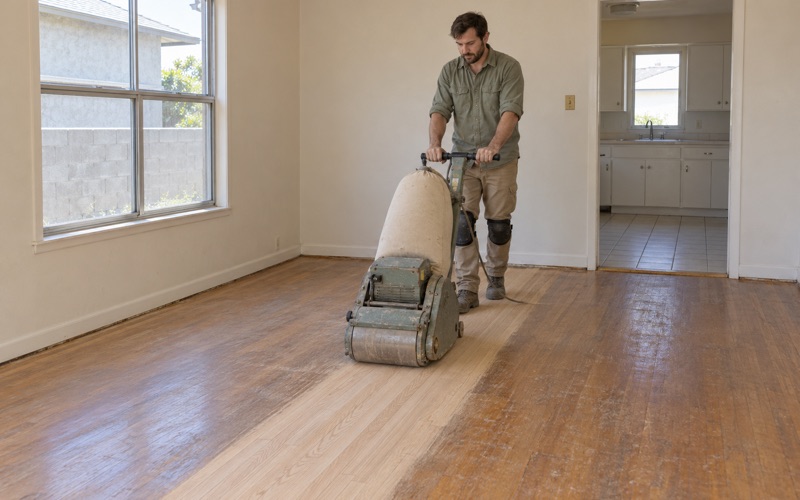
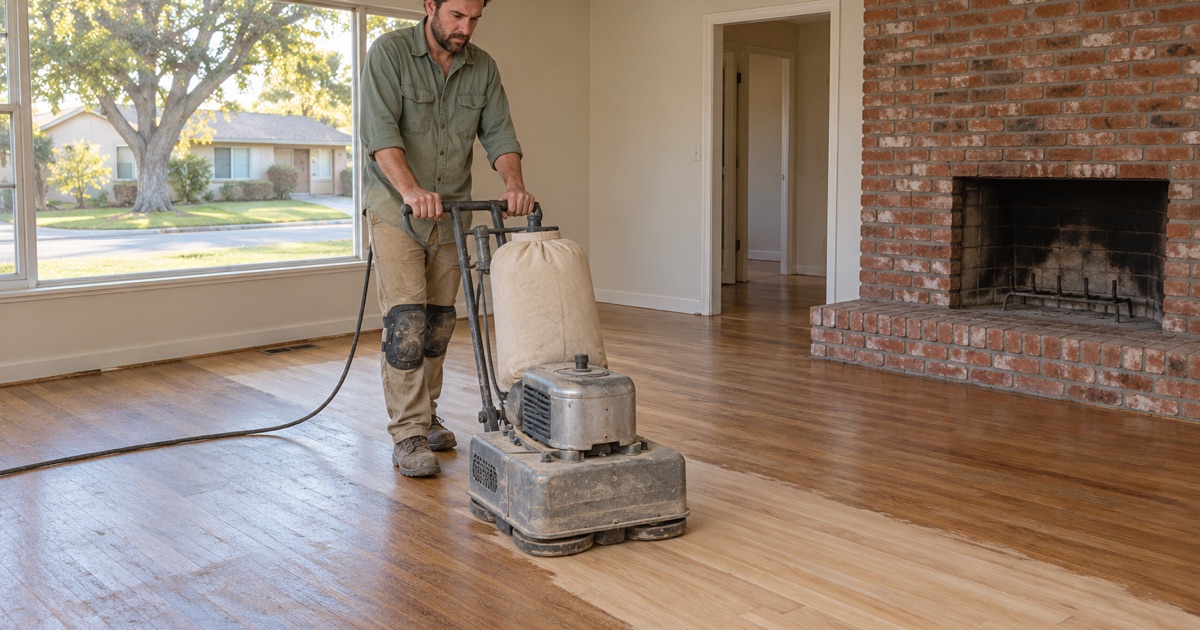
For a floor, upkeep is practical: how often it needs a recoat, how much scratches show, how hard it is to clean, and how much furniture has to move when work is done. A worn hardwood floor can usually be screened and recoated, or fully sanded and refinished, without replacing a board. Carpet at the end of its life raises a bigger question about what lies beneath it and whether it should come up at all.
Keeping, Refinishing or Simplifying
We lay out three paths for an owner who plans to stay. Keep the existing floor and maintain it, refinish it with a harder-wearing finish, or simplify by replacing worn carpet and mixed flooring with one continuous wood surface through the main rooms. None is automatically right, and the written estimate shows what each costs so the choice fits the house and the budget.
Simplifying does not always mean replacing. Sometimes it means pulling carpet out of a bedroom that is no longer used and refinishing any wood under it, or recoating a floor that only looks tired rather than sanding it bare.
Working Around a Household at Home
An owner who is home through the day needs the job to fit the household rather than the other way around. We set up dust containment, work room by room where the layout allows, and hand over a written cure schedule showing when each room can be walked on and when furniture can go back. That schedule matters most in a house where nobody moves out while the floors are done.
Clearing rooms is often the hardest part of a floor project in a house that has been lived in for decades. We plan the order of rooms with the owner before the start date so furniture moves once, not three times, and we try to keep a path open to the kitchen and a bathroom.
Looking for wood-flooring closer to Artesia? See Wood-Flooring Services in Artesia.
Floors in Cerritos Houses From the 1960s and 1970s
Cerritos was built quickly. Incorporated as Dairy Valley in 1956 and renamed Cerritos in 1967, the city grew from 4,373 residents in 1968 to 40,750 in 1973. ACS 2024 estimates place 55.1 percent of the city’s housing units in the 1970s and 83.2 percent before 1980. The stock is mostly detached, and 89.5 percent of owner households live in a detached house.
For floor work, that vintage sets the checklist before anything is sanded. A 1970s house has usually been through decades of carpet, tile and patching, and each layer has to be identified before the next decision is made.
Lead-Safe Work on Pre-1978 Houses
A house built before 1978 may have lead-based paint on baseboards, door casings and stair parts that floor work disturbs. We follow lead-safe work practices under the EPA Renovation, Repair and Painting rule, which governs how trim comes off, how dust is contained and how the work area is cleaned. With most of the city’s houses built before 1980, we treat this as the normal case in Cerritos, not the exception.
Old Tile, Black Mastic and Tack Strip
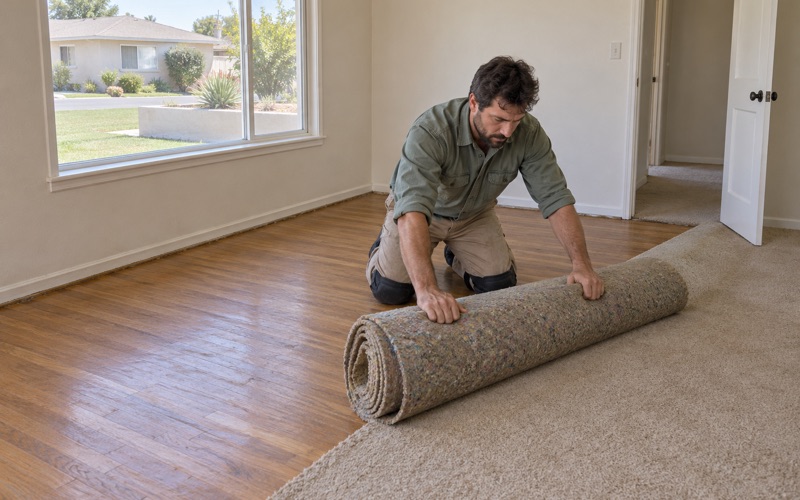
Tile is the layer to be careful with. Old floor tile, including the 9x9 size, and black mastic adhesive are treated as a possible asbestos question before anything is sanded or scraped, with an asbestos survey before removal where one is warranted. When carpet comes up, we lift the pad, staples and tack strip and fill the holes before sanding, so any hardwood found underneath refinishes clean.
Moisture and the Subfloor
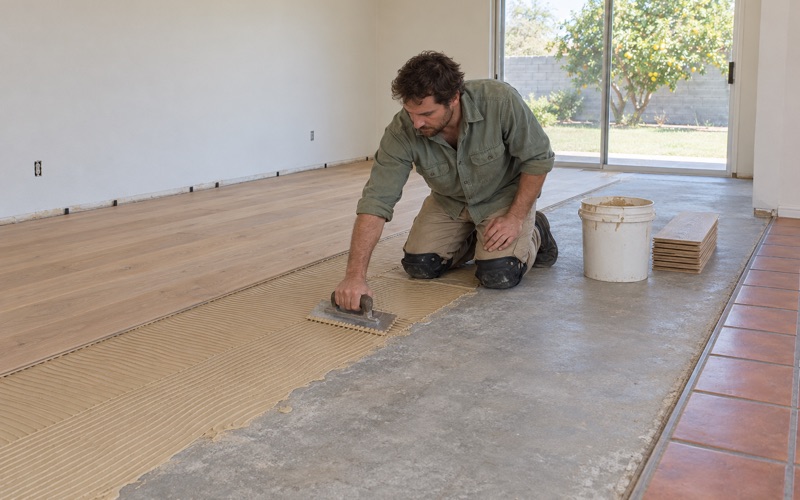
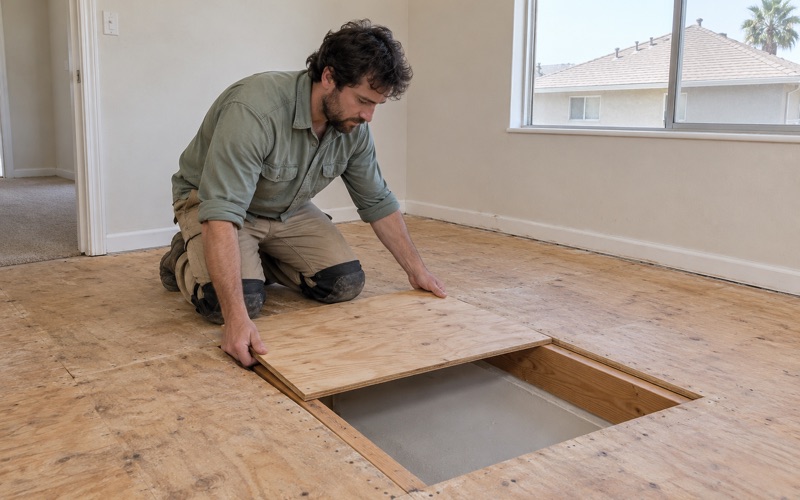
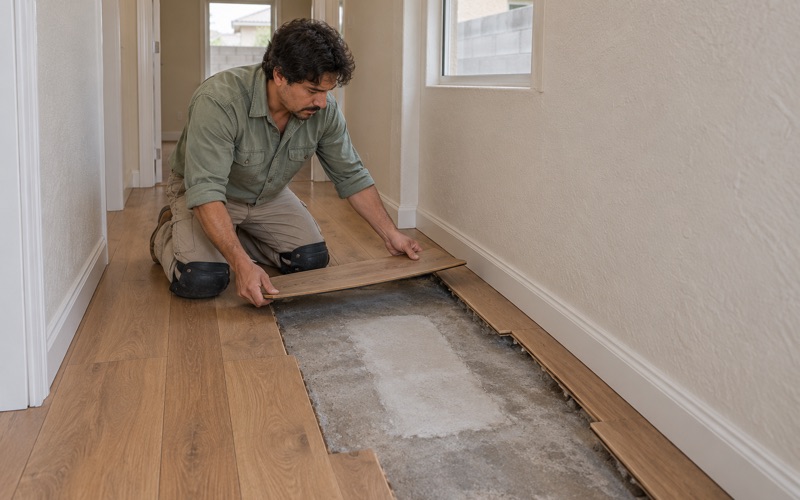
Decades of living leave marks a finish does not show, from an old dishwasher leak to swollen sheathing beside a bathroom. We check the subfloor for soft spots and water damage before a finish floor is priced, and we measure moisture in the wood and in any concrete beneath it. Where a plumbing repair has opened a floor, we plan around the plumber’s access hole and patch the wood back in to match.
Moisture content also matters for new wood brought into the house. Boards are checked with a wood moisture meter and allowed to acclimate before installation, and the readings go into the job file alongside the subfloor findings.
Choosing Floor Work for the Years Ahead
A floor chosen for the long haul should be judged on how it will look and wear years from now, not on the showroom sample. We talk through species, finish and installation method with that horizon in mind, and we say so when the existing floor is the better value.
Finish Choices and Sheen
Finish is where most of a floor’s upkeep lives. Waterborne polyurethane stays clearer and avoids the orange oak color change that oil-modified polyurethane develops over time, while a hardwax oil finish can be spot-repaired in a worn area without redoing the whole room. Every finish we apply is chosen from products legal in the South Coast air basin under SCAQMD Rule 1113 and its 275 g/L limit for wood coatings. A lower sheen level also hides everyday scratches better than a high gloss.
Species, Wear Layer and Installation
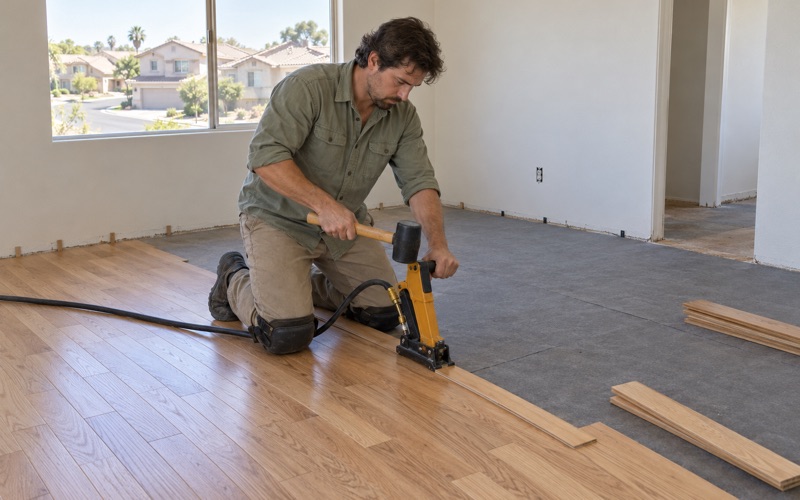
If new flooring goes in, hardness and construction decide how it ages. The Janka hardness rating compares species, and white oak and hickory resist dents better than softer woods, while an engineered floor with a thicker wear layer can be sanded again later. We follow NWFA installation guidelines for fastening and expansion gaps, whichever method suits the room: nail-down, glue-down or floating.
A Floor That Is Easier to Live With
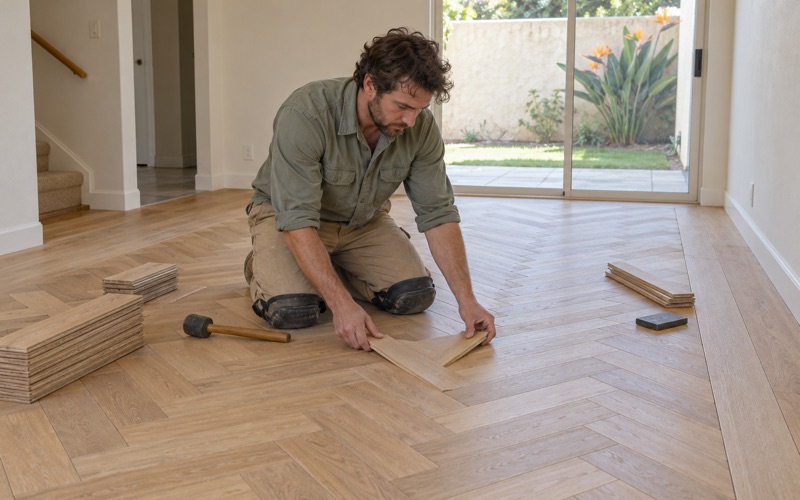
For owners simplifying a house, fewer transitions between rooms means fewer reducer strips and T-moldings to clean around and maintain. A continuous floor through the living areas also cleans in one pass and ages evenly, since the same finish wears at the same rate across it. Shoe molding is reset or replaced along the walls so the edges read as finished work rather than an afterthought.
Stairs and Small Repairs
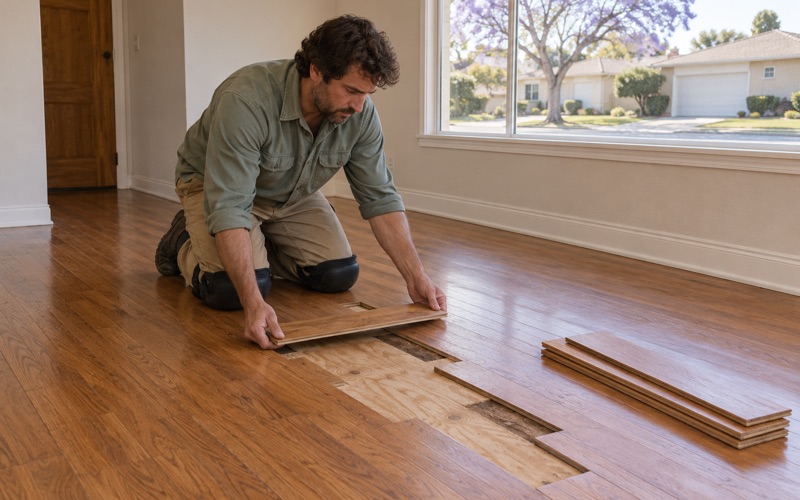
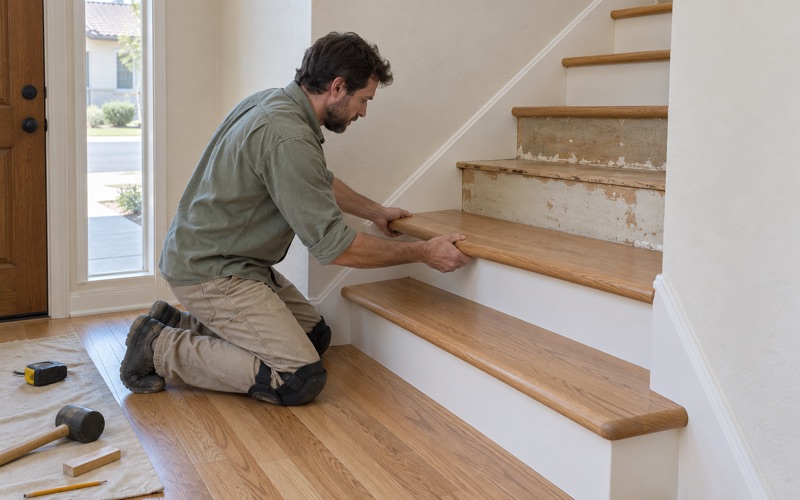
Stairs are priced per tread and riser instead of being folded into a square-foot number, so an owner sees what the staircase adds on its own. Where a floor only needs a few boards, we match discontinued flooring by species, width and finish so a weave-in repair does not read as a patch. Repairs like these often keep a sound floor in service for years without a full replacement.
Stair nosing and treads take the heaviest wear in most houses, so they often need attention before the rest of the floor. Refinishing or replacing a staircase on its own is a reasonable first project for an owner phasing work.
What the City Says About Aging Housing
The City of Cerritos housing element also looks at the condition of its homes. It states that “units built before 1980 typically need some level of continued maintenance or rehabilitation,” and it reports that the City’s Code Enforcement Division considers a majority of units to be in good condition because owners and property managers keep them well maintained.
That fits what we see in Cerritos houses. The structures are generally cared for, and the floors tend to be where age shows: finish worn through in traffic lanes, board gaps, squeaks, and carpet that has outlived its pad.
The same document counted people 65 and older at 23.2 percent of Cerritos residents. Many of those residents live in houses the element describes as aging but well kept, which is where planned floor care pays off.
Planning Maintenance Instead of Reacting
The element expects a number of units to need maintenance during the 2021-2029 planning period simply because of their age. For an owner staying put, that argues for scheduling floor work on your own terms rather than after a leak or a failed finish forces it. A screen and recoat costs far less than a full sanding, and a full sanding costs far less than replacement.
Estimates You Can Set Aside and Revisit
Our estimates are written and itemized room by room, so an owner can hold one project, split another across seasons, or share the numbers with family before deciding. If water damage turns up, we trace it to the source and document it with photos and readings an insurance adjuster can use. Either way, the decision stays with the owner, made with the facts on paper.
When the estimate is in hand, there is no pressure to act on all of it at once. Some owners start with the rooms they use most and leave the rest for a later year, and a written plan keeps the finish and color consistent when the second phase comes.
- 20+ Years of Floor Work
- Written, Itemized Estimates
- Moisture Readings Recorded